Safety - ID
Worker safety: PPE, presence, man down
Identify PPE
A small microchip, in various technologies, can be applied to each PPE.
Identify Area
Each department or work area is identified by a tag/microchip.
Smartphone
With a commercial / ATEX smartphone you can read all the microchips of the PPE and the identification tags.
Smart Bracelet
Real-time heart rate monitoring, automatic alarm system for beating outside the ranges. The bracelet vibrates and displays the notifications it receives.
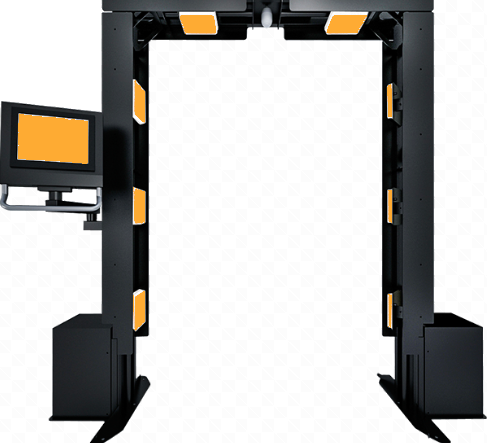
Control Gate
With a Gate, composed by RFID UHF Antennas, it is possible to read all the DPI microchips, worn by the worker. Notification system through colored LEDs, audio messages and notifications on the APP.

Smart Helmet
A motion sensor tells whether the helmet is being worn and reports when the worker takes it off. A second sensor detects falls and raises the Man Down alarm. There is also an emergency call button.

Real-Time Location (RTLS)
BLE and LoRaWAN gateways deployed across the site track workers and vehicles continuously, not only when they pass a gate.
Multichannel Notifications
Alarms and expiry warnings delivered over six channels: push notification in the APP, WhatsApp, Telegram, SMS, e-mail and voice call in the worker's own language.
In case of Emergency
Cloud storage of information relevant to emergency situations: first aid contacts, allergies, diseases, trauma, blood type, RH factor.
Safety – ID ~ Mobile APP
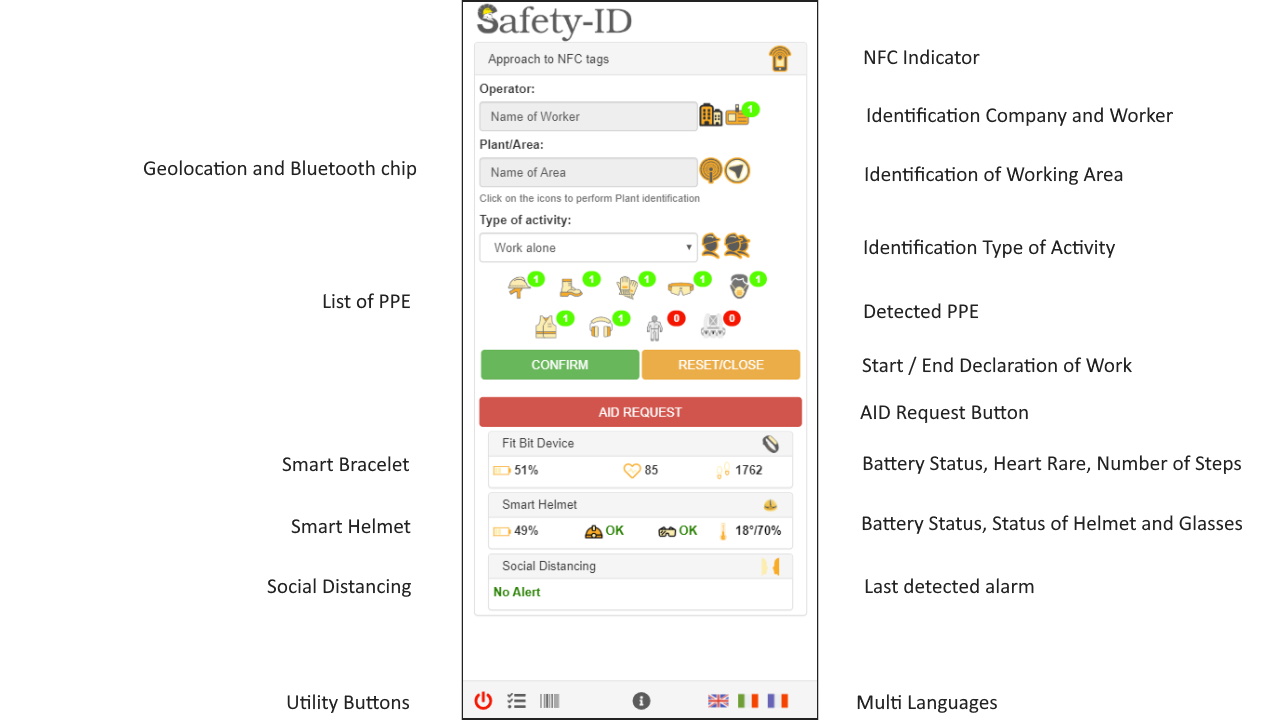
- Identify workers with NFC (Near Field Communication) badges or NFC/UHF labels to be glued to the badge
- Plant identification through various technologies
- Declare whether working in pairs/group or alone
- Reading of Tags/Microchips attached to the PPE
- Send explicit aid request
- Respond to KEEP ALIVE notifications
- Heart rate monitoring
- Smart helmet with Man Down function
- Real-time location (RTLS) with BLE and LoRaWAN gateways
- Multichannel notifications: push, WhatsApp, Telegram, SMS, e-mail and voice call
- Start & Stop Activities
A small microchip in various technologies can be applied to each PPE.
-
Helmet
NFC / UHF / BLE TAG
NFC/UHF/BLE tag attached on the back of helmet -
 Shoes
Shoes
SEWABLE TAG
NFC/UHF tag attached to laces of shoes -
 Gloves
SEWABLE TAG
NFC/UHF tag attached to the fabric -
 Glasses
NFC/UHF LABELS
NFC/UHF tag attached to the frames of glasses -
 Jacket
SEWABLE TAG
NFC/UHF tag attached to the fabric -
 Headset
NFC/UHF TAG
NFC/UHF passive tag -
 Vest
Vest
SEWABLE TAG
NFC/UHF tag attached to the fabric -
 Harness
NFC/UHF TAG
NFC/UHF passive tag
Features
Compatible with Android smartphones equipped with GPS, Bluetooth, NFC and with Rugged Smartphones also equipped with RFID UHF Antenna.

Compatible with Iphone 7 or higher.

Compatible with Atex Android smartphones and tablets, which can be used in Plants with an high risk of explosion and fire.

Cloud Management: complete control and management through the web platform.
Videos
PPE Scan
FitBand
Gate - PPE check with positive result
Gate - PPE check with negative result
Insights
The questions we are asked most often, answered at length.
PPE inspection records
What they must contain, who signs them, and why a spreadsheet eventually fails.
Site access control with NFC badges
Who is inside right now, and when a gate actually pays off.
Man-down systems
How detection works, how to avoid false alarms, what the alarm chain must do.
Real-time location (RTLS)
When you really need it, and when it is only an expense.
The safety smartwatch
Heart rate, position and a rescue button on the wrist: what it really does, and what it does not.
PPE and devices in ATEX areas
Zones, categories, and the mistake that stalls half the projects.